


Who Pays When You Are a Passenger Injured in a Missouri Car Accident?
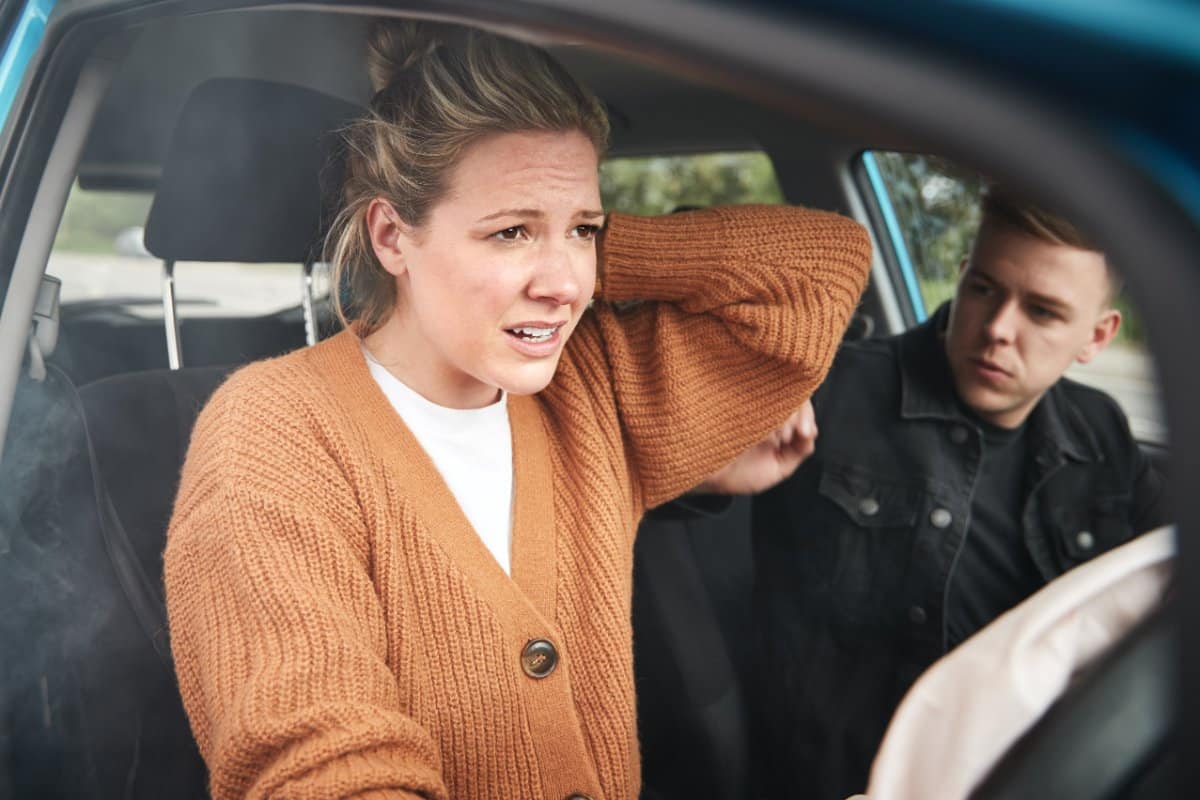
In such situations, some of the possible sources of compensation may include the driver of the vehicle the passenger was in, or another driver who caused the crash. In some cases, multiple drivers may be involved or the employer of an at-fault driver could also be held responsible. Passengers may also be covered by the uninsured/underinsured motorist clause of their own insurance policy in scenarios where the at-fault party doesn’t have insurance or doesn’t have sufficient insurance.
The important thing to remember if you’re a passenger who has been injured in a Missouri car accident is that who pays for your injuries is decided by who caused the crash or whose insurance policy applies in your case — not just the detail of which car you were sitting in at the time of the crash.
Can an Injured Passenger Make a Missouri Car Accident Claim?
Injured passengers can pursue compensation for their injuries and losses when another person’s negligence or wrongdoing has caused their injuries. Some of the damages injured passengers can recover from a car accident claim in Missouri include:
· Medical expenses
· Lost wages
· Cost of future medical care
· Past and future pain and suffering
· Permanent injuries
· Disabilities
Missouri has a pure comparative fault rule, which means injured victims can seek compensation even when they are partly at fault. Their percentage of fault might impact the amount of compensation they receive.
But, when it comes to passengers, the more important question involving fault is about driver negligence. Because passengers don’t have control over the vehicle, typically, in cases where a passenger has been injured, it is the at-fault driver who is held responsible.
If the Driver of Your Car Caused the Crash, Who Pays?
Sometimes, the answer to this question is pretty straightforward. For example, let’s say you were a passenger in your friend’s car and they ran a red light, causing a crash. You got injured. But, you did nothing to cause the crash. In such a situation, you may be able to file a claim against your friend’s auto insurance policy.
Missouri law requires drivers to have minimum liability coverage of $25,000 for one person and $50,000 for injuries to two or more people in an accident. But, these limits, obviously, may not be enough to cover serious or life-changing injuries.
There is, of course, an emotional aspect to such claims. You may hesitate or feel awkward filing an insurance claim when the driver is a friend or a family member. But, a claim doesn’t mean you are asking that person to pay you. Rather, you’re seeking compensation you need from their insurance company.
You could still face challenges. For example, your friend’s insurance policy limits may be lower or they may be excluded from the policy. Sometimes, insurance companies may argue that coverage doesn’t apply. Also, if several passengers are injured in one crash, they may have to share whatever insurance coverage is available.
If you’ve suffered severe injuries, the coverage that’s available may simply not be enough to cover medical costs, lost wages and other losses. In these situations, your car accident lawyer may be able to explore other potential sources of compensation.
What If the Other Driver Caused the Accident?
As an injured passenger, you may also be able to file a claim against another driver who caused the accident. For example, let’s say you were a passenger in Vehicle A when Vehicle B hits your car from behind. If that driver was at fault, you may be able to seek compensation from that driver’s liability insurance. You don’t have to own either vehicle to file a claim. As a passenger, you have the right to seek compensation from the driver whose negligence (carelessness) caused your injuries.
Several pieces of evidence can help show who was responsible for the crash, which may include:
· Police reports
· Statements from drivers and other passengers
· Eyewitness accounts
· Dashcam or surveillance video footage
· Damage to vehicles
· Accident reconstruction experts, in more serious accident cases
What if Both Drivers Share Fault?
It’s common to see car accident cases where both drivers share some degree of fault for the crash. This could complicate your injury claim as a passenger because more than one insurance policy may be involved.
Let’s take a scenario where Driver A is 60% responsible for a crash and Driver B is 40% responsible. A passenger suffers $200,000 in damages in the accident. Now, his or her claim may be against both drivers and their insurers. Missouri’s comparative fault system says that responsibility for an accident can be divided among the parties that were at fault.
This can be important especially in cases where one driver’s insurance policy alone is not enough to cover the passenger’s injuries and damages. It can also become a factor when several people are injured in the same crash, when drivers dispute who or what caused the accident or when one of the vehicle’s drivers was on the job at the time of the crash.
The most important takeaway is that a passenger’s claim should not end after the first insurance policy is identified. An investigation into each driver’s role and their insurance coverage can help determine all available sources of compensation.
What if the Driver is Your Spouse, Relative or Friend?
Passengers often hesitate to file a claim when the at-fault driver is someone they know – let alone their spouse, relative or friend. But, what is really important to understand here is that the liability claim is generally made against the auto insurance coverage, not your friend or loved one.
The actual coverage can depend on factors like who owns the vehicle, who was driving at the time, what the household relationships look like as well as what’s excluded or included in the policy. Also, every policy and accident is different. So, you should not assume that you will automatically be covered, or not covered, just because the driver was your friend or relative.
Can Medical Payments Coverage Pay a Passenger’s Bills?
Medical payments coverage, also known as MedPay, could help pay some medical expenses after a Missouri car accident. Missouri’s Department of Insurance defines MedPay as optional coverage that helps pay for medical treatment not just for the insured driver, but also their passengers, regardless of who caused the accident.
This coverage is very important, especially right after a crash. Liability claims could take months to settle because it takes time for insurance companies to investigate and determine who was at fault. But, when you have MedPay, it provides a quick way to pay for immediate hospital bills, ambulance charges or doctor’s office visits.
MedPay is different from bodily injury liability coverage. The big distinction there is while liability coverage pays for injuries to others when a driver is at fault for an accident, MedPay protects everyone in the driver’s vehicle regardless of who was responsible for the crash.
What if the At-Fault Driver Has No Insurance?
If you are injured by a driver who doesn’t have insurance, you are still protected. Missouri law requires all auto liability policies to include uninsured motorist coverage. This makes sure that you can still recover compensation even if the liable driver is uninsured. Your uninsured motorist clause protects in three important situations:
· Uninsured driver: A driver who doesn’t have auto insurance coverage.
· Hit-and-run driver: A driver who flees the accident scene after causing the crash.
· Phantom/no-contact vehicle: This is when an unidentified vehicle causes an accident without physical contact, such as forcing your car off the road.
One important thing to remember if you are a passenger is that under Missouri case law, passengers don’t automatically qualify for uninsured motorist coverage, even if the driver of the vehicle they are in, may have it. Whether you are eligible depends on what the policy says. It also depends on your own auto insurance policy or your family/household’s coverage.
What if the At-Fault Driver Has Insurance But Not Enough?
When a negligent driver has insurance, but not enough to cover all your damage, underinsured motorist coverage becomes really important. According to Missouri’s Department of Insurance, this is an optional coverage designed specifically for situations where the at-fault driver’s liability insurance doesn’t adequately compensate your losses.
For instance, take a situation where an injured passenger suffers $300,000 in total damages, but the at-fault motorist only has Missouri’s required minimum of $25,000 for bodily injury. In this case, there is a huge $275,000 gap. Underinsured motorist coverage typically bridges financial gaps at a time when you most need such coverage.
But, underinsured motorist coverage is not automatic. A lot depends on how the insurance policies are worded. To learn more about how you may be able to get this type of coverage, read our guide on how to find additional insurance coverage after a serious accident.
What If Several Passengers Are Injured?
When multiple passengers are injured in a single crash, per-accident policy limits could become a problem. Missouri’s minimum liability limits are $25,000 per injured person and a maximum of $50,000 total bodily injury coverage per accident.
Let’s say three passengers each suffer serious injuries in a crash caused by a driver who only has minimum coverage. Even if each passenger’s medical bills go over $25,000, they can’t all collect that amount. All three together can only get up to $50,000, which can cause a severe financial strain for the victims.
So, when a single policy is spread too thin, finding other sources of compensation is very important. An experienced attorney will look into all responsible parties, additional insurance policies, underinsured motorist coverage or commercial or umbrella coverage, which can all help maximize an injured passenger’s compensation.
What if the At-Fault Driver Was Working?
If the driver who caused your accident was on the job at the time, his or her employer could also be held responsible. If your crash involved a delivery driver, salesperson, contractor or commercial truck driver who was operating their own vehicle or a company-owned vehicle, that could open up new sources of compensation.
Commercial insurance policies provide much greater coverage than a personal policy. Some business policies may carry millions of dollars in protection. To effectively track down these policies, your attorney will work to identify the driver, the vehicle owner, the employer and their commercial insurer in addition to any other responsible parties. If you were injured by a large truck, learn more by reading our detailed article about truck accidents.
Can a Passenger Use Their Own Auto Insurance?
An injured passenger can use their own auto insurance. But, that depends on what type of coverage they have and what their policy says. Many tend to believe that riding in someone else’s car means they can’t use their own auto insurance policy. But, that is not always true. If an at-fault driver has insufficient insurance coverage or no coverage at all, your own policy can provide the support you need at this critical time through:
· Uninsured Motorist (UM) coverage
· Underinsured Motorist (UIM) coverage
· Medical Payments or MedPay coverage
· Policies held by relatives with whom you live
But, you may not be able to “stack” multiple policies. There are specific policy exclusions under state law that make recovering compensation from multiple policies extremely complicated.
Example: Passenger Seriously Injured in Two-Car Missouri Crash
Let’s take a hypothetical case of a crash where a passenger suffers $175,000 in damages. Let’s say the fault in this crash is split between two drivers. The driver of the passenger’s vehicle is 30% at fault while the other driver is 70% at fault. The available insurance may include:
· Drive A: $100,000
· Driver B: $50,000
· Potential UIM policy: $100,000
· MedPay coverage: $5,000
Soon after the crash, the passenger may have access to MedPay to pay those bills. From there, they may pursue liability claims against both drivers based on their fault percentages. If they are still not able to get fully compensated, the passengers own UIM policy could help bridge the gap.
Frequently Asked Questions
Can I sue the driver if I was a passenger in their car?
You may be able to sue the driver, if that driver’s negligence (carelessness) caused or contributed to the crash.
What if the driver is my friend or family member?
Remember that you’re not taking their money. You file a claim with the insurance company so you are fairly compensated for your losses and damages.
What if I was riding in an Uber or Lyft?
Rideshare accidents have different rules when it comes to insurance. They also involve commercial policies with higher limits. For details see our page about rideshare accidents.
Does Missouri require uninsured motorist coverage?
Yes, Missouri Revised Statute Section 379.203 says auto liability policies must include uninsured motorist bodily injury coverage.
Does Missouri require underinsured motorist coverage?
No, underinsured motorist coverage is optional in Missouri.
What if I do not know which driver caused the crash?
An experienced Missouri car accident lawyer can help investigate the crash and determine fault and liability.
Contacting Our Kansas City Accident Injury Attorneys
There is no single insurance policy that automatically pays injured passengers. The source of compensation depends on who caused the crash, whether multiple drivers share fault, what the available liability limits are and whether larger policies may be available. If you’ve been injured in a car accident, navigating these complex layers can be a challenge. Our Kansas City accident injury attorneys bring significant experience investigating serious crashes statewide. Our legal team diligently looks at every detail, cuts through insurer disputes and works hard to identify every available source of coverage to help injured passengers recover maximum compensation.

Kansas City personal injury attorney James Roswold of Kansas City Accident Injury Attorneys handles cases dealing with victims of personal injury, medical negligence, wrongful death, workers compensation, nursing home negligence, premises liability, product liability, car accident, truck accident and motorcycle accident cases.