


Missouri Helmet Laws: A Guide to Your Legal Rights
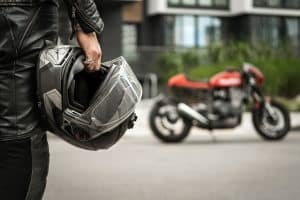 Missouri has a partial helmet law (RSMo. § 302.026), under which all motorcycle riders and passengers under the age of 26 as well as anyone — regardless of age — operating with an instruction permit, must wear a helmet. Riders 26 years of age and older are exempt from wearing a helmet if they can show proof of health insurance that covers motorcycle-related injuries.
Key Takeaways
- Helmets are mandatory for riders and passengers under 26 years of age and for those with an instruction permit.
- Riders and passengers are exempt if they are 26 years of age or older, or if they are insured for motorcycle injuries.
- Secondary enforcement applies, which means police cannot pull you over for not wearing a helmet. You can only be cited for a helmet violation if you were initially pulled over for a primary violation such as speeding.
- Choosing not to wear a helmet can affect your personal injury claim and may be viewed as contributing to your injuries (contributory negligence), potentially limiting your compensation.
The Current Missouri Helmet Law: Who Must Wear a Helmet?
Missouri law clearly states that any motorcycle rider or passenger under the age of 26 or on a learner’s permit must wear a helmet.
To legally ride a motorcycle in Missouri without a helmet, a rider or passenger must meet all of the following three conditions:
- Be 26 years of age or older.
- Have health insurance coverage that provides medical benefits for injuries sustained in a motorcycle accident.
- The rider must have proof of liability insurance in Missouri that covers $25,000 bodily injury per person and $50,000 per accident.
Additionally, the Revised Statutes of Missouri (RSMo) Section 302.026, spell out the specific criteria that exempts older insured riders.
Enforcement and Penalties for Helmet Law Violations
What is Secondary Enforcement?
Under Missouri law, failure to wear a helmet is termed a “secondary enforcement offense.” This essentially means that police cannot stop a motorcyclist for not being helmeted or to check if they have valid insurance. An officer can cite the rider for not wearing a helmet only if the motorcyclist had already been stopped for an initial violation such as failing to stop at a stop sign or exceeding the speed limit, etc.
What Are the Penalties?
The fines and penalties for violating Missouri’s helmet laws are as follows:
| Not wearing a helmet | Infraction |
| Fine | $25 per infraction/violation |
| Points on driving record | No points are assessed on the motorcyclist’s driving record for a helmet law violation. |
What Documents Must Exempt Motorcyclists Carry?
An exempt motorcyclist (not legally required to wear a helmet in Missouri) must carry the following documents:
- Driver’s license bearing a Class M endorsement, also known as a motorcycle license.
- Insurance documents that show proof that the rider has medical coverage for injuries suffered in a motorcycle accident.
- Liability insurance as required under Missouri law.
How Not Wearing A Helmet Can Impact Personal Injury Claims
While not wearing a helmet might be legal for some riders in Missouri, it can still become a factor in a motorcycle accident claim. Missouri uses what is known as a “pure comparative negligence” system. This means the compensation you receive could be reduced depending on the percentage of fault that is assigned to you.
It is also common for insurance companies to raise the “helmet defense,” presenting the argument that a motorcyclist suffered severe injuries because of their failure to wear a helmet — even if the other driver is deemed at fault. When a rider does wear a helmet, it puts them in a stronger position because they are viewed as a safe operator who took that precaution to prevent serious injury.
National Context: States with No Helmet Laws
There are three states that currently have no universal helmet law for adult riders — Illinois, Iowa and New Hampshire. This means helmet use for riders of all ages is largely at the discretion of the individual.
| State | Helmet law type | Required Use/Exceptions |
| Missouri | Partial | Mandatory for riders under 26 years of age and instruction permit holders. Riders 26 years of age or older are exempt if they maintain proof of insurance. |
| Illinois | None | No helmet requirement for any rider or passenger at any age. |
| Iowa | None | No helmet requirement for any rider or passenger at any age. |
| New Hampshire | None | No helmet requirement for any rider or passenger at any age. |
Frequently Asked Questions About Motorcycle Helmet Laws
Did Missouri get rid of the helmet law?
Yes. Missouri repealed its universal motorcycle helmet law in 2020.
Is it legal to ride in Missouri without a helmet?
Under the current law, which went into effect on Aug. 28, 2020, only riders under the age of 26 or those riding with only a permit, are required to wear helmets. Those 26 years of age or older may ride without wearing a helmet as long as they have proof of the required insurance coverage.
What type of insurance do I need to ride without a helmet?
You must have valid health insurance or its equivalent in medical benefits insurance, which covers injuries sustained in a motorcycle accident.
Does a passenger have to wear a helmet?
Missouri law requires motorcycle passengers to wear helmets if they are under 26 years of age or if the operator is under a permit.
Can I get pulled over for not wearing a helmet?
You cannot be pulled over solely for not wearing a helmet. An officer would need another reason such as speeding (a primary violation), to cite you for a helmet violation.
Freedom of Choice Comes with Responsibilities
It is important to remember that riding without a helmet in Missouri — even when legal for some — can have serious physical and financial consequences. Riding without a helmet comes with an increased risk of serious head injuries and long-term disabilities requiring extensive medical care, rehabilitation or even lifelong support, which can all prove very costly. In addition, not wearing a helmet can affect your compensation after an accident.
If you have been injured in a motorcycle accident — regardless of wearing or not wearing a helmet — please contact our Kansas City motorcycle accident lawyers who can help protect your rights. Insurance companies, their attorneys and adjusters often use the “helmet defense” to avoid paying fair compensation to victims and their families. We will fight hard to help you receive maximum compensation for your injuries, damages and losses.

Kansas City personal injury attorney James Roswold of Kansas City Accident Injury Attorneys handles cases dealing with victims of personal injury, medical negligence, wrongful death, workers compensation, nursing home negligence, premises liability, product liability, car accident, truck accident and motorcycle accident cases.