


Missouri Construction Accident Statistics
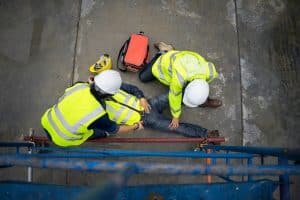
Missouri Construction Injury Statistics
Missouri’s construction industry reports higher injury rates than other private-sector industries. According to the latest data from the U.S. Bureau of Labor Statistics (BLS), Missouri saw about 4,000 nonfatal workplace injuries in 2023. Of those cases, about 3,100 involved days away from work, job transfers or work restrictions – what are known as DART. This tells us that most reported incidents were serious enough to affect a worker’s ability to perform his or her job.
BLS reported a total recordable case (TRC) rate of 3.1 injuries and illnesses per 100 full-time construction workers in Missouri in 2023. TRC is a standardized metric that is used in occupational health and safety to measure how frequently workplace injuries occur and it represents the number of work-related injuries per 100 full-time workers over a one-year period.
In Missouri, statistics from BLS show that this rate – at 3.1 — was notably higher than the 2.6 rate for all Missouri private industries and above the national private-industry average of 2.4. Missouri construction workers also experienced a DART rate of 2.4 per 100 workers, compared with 1.4 for Missouri private industry overall, BLS statistics from 2023 show.
Recent trends also indicate that injury rates in Missouri construction have increased rather than declined. The industry’s total recordable case rate rose from 2.8 in 2022 to 3.1 in 2023, while the DART rate increased significantly from 1.6 to 2.4 during the same period, according to BLS. These figures suggest that not only did the number of reported incidents increase, but also a larger share of injuries resulted in lost work time or job restrictions.
Construction still remains one of Missouri’s most dangerous industries when it comes to incidents involving major injuries and deaths. While BLS reported 114 occupational fatalities across all industries in Missouri in 2023, construction consistently ranks among the sectors with the highest risk of fatal injuries nationwide — particularly from falls, struck-by incidents, electrocutions and caught-in/between accidents. So, BLS statistics from 2023 show that Missouri’s construction workers continue to face injury risks that are substantially higher than most other industries in the state.
Missouri Construction Fatality Statistics
In addition to injuries, Missouri’s construction workers are also at serious risk of dying on the job. to the BLS Census of Fatal Occupational Injuries, 16 construction workers lost their lives on the job in Missouri in 2023. This accounts for about 14% of all 114 workplace deaths statewide that year. Missouri’s construction industry also reported the second highest number of workplace deaths that year.
While looking at recent trends, we see that construction accident deaths have fluctuated over the years, but continue to be a serious safety concern. Missouri’s Department of Labor and Industrial Relations reported 22 construction site deaths in 2024, which was up from 16 in 2023. This shows a year-over-year increase of nearly 38%. Over the last decade or so, construction has consistently ranked among Missouri’s most dangerous industries. Data from the Census of Fatal Occupational Injuries show 19 construction fatalities in 2013, showing that the annual totals have remained in the mid- to high teens over the past 10 years in spite of advances in safety programs and regulatory enforcement.
Missouri’s statistics mirror national trends. Nationwide, construction and extraction industries accounted for 1,055 workplace fatalities in 2023, representing about 20% of all occupational fatalities nationwide – more than any other industry, according to BLS statistics. The numbers show that falls and slip-trip-and-fall incidents continue to be the leading cause of construction deaths nationally.
Leading Causes of Construction Accidents
Most construction accident injuries and fatalities are caused by four well-known dangers lurking in every worksite – dangers that the U.S. Occupational Safety and Health Administration (OSHA) identifies as the “Fatal Four”; they include falls, struck-by incidents, electrocutions and caught in/between accidents.
Falls: Falling from heights is the leading cause of construction deaths not just in Missouri, but across the United States. Laborers and other skilled workers often find themselves climbing onto roofs, scaffolds and ladders. When they are not provided with adequate fall protection or are forced to work on unstable or slippery surfaces, the risk of a fall is significantly higher. Even falls from relatively lower heights can cause traumatic brain injuries, spinal cord damage or even death.
Struck-by accidents: These types of accidents occur when workers are hit by falling tools, building materials, vehicles or equipment. In any busy construction site, it is common to see a number of different jobs being done at once. This heightens the risk of workers being struck by objects, tools or machinery.
Electrocutions: Construction workers regularly work near power lines and other electrical systems. This is why electrocutions are a real danger in the construction industry. Workers suffer serious burn injuries as a result of an electric shock. Electrocutions could also result in cardiac arrest, permanent disabilities or death.
Caught in/between accidents: These occur when workers become trapped between machinery, equipment, collapsing walls or trenches. Workers could get caught in or between objects or machinery when they are engaged in trenching, excavation or other project that use heavy equipment.
A number of these construction accidents happen on worksites because of lax safety, inadequate supervision, equipment failure or unrealistic deadlines. When workers receive proper training and protective gear and equipment, such serious and life-changing injuries can be prevented.
Construction Injuries that Occur Frequently
Construction accidents can cause a number of injuries including disabilities that could turn lives upside down. Some of the most common injuries reported on construction sites in Missouri include:
Traumatic brain injuries: These injuries often occur as a result of falls, falling objects or equipment-related mishaps. Brain injuries can range from concussions to severe brain damage that could affect a worker’s memory, cognitive ability, motor skills and often times, even their ability to return to work.
Fractures: Broken bones are often caused by falls, struck-by accidents, vehicle collisions and incidents that involve heavy equipment such as forklifts. Accidents could result in broken bones in arms, legs, ribs, wrists, ankles and hips – all of which could severely restrict mobility and affect the worker’s ability to return to work. Severe fractures may require surgery and lengthy rehabilitation.
Injuries to the Spinal Cord: These can occur in a construction accident when a worker falls from an elevation, or is crushed by or caught in between equipment, etc. Often, the victim suffers damage to his or her spinal cord that results in partial paralysis or in some cases, complete paralysis. The consequences of such permanent injuries tend to be extended or lifelong medical treatment, assistive care and comprehensive rehabilitation, etc.
Burn injuries: Chemical, electrical or thermal burns as a result of exposure to hazardous substances including chemicals, explosions, fires and electrocutions are unfortunately common in construction sites. Victims can suffer infections, severe tissue damage and scarring in these types of incidents.
Amputations: Construction workers who are injured in accidents involving power tool malfunctions, caught in/between incidents, machinery malfunction can suffer from amputations such as loss of fingers or limbs. Amputations tend to result in permanent disabilities and take an emotional and financial toll on both the victims and their families.
Crush Injuries: Heavy construction material, large machinery that have fast moving or sharp parts, vehicles, or structures that are unstable, etc. are all commonly found in construction sites. When these are involved in a crushing incident, the victim can suffer severe or life-threatening injuries with damage to his or her muscles, nerves, organs and bones, etc.
Back injuries: These are among the most common construction accident injuries that do not end up being fatal. Heavy lifting, repetitive motions and falls can cause muscle strains, herniated discs and chronic pain that may limit a worker’s ability to do their job.
Construction Accidents and Occupation Types
It is generally accepted that all construction workers face significant hazards on the job. However, the roles that some workers carry out and the environments in which they perform those tasks present significantly higher injury and fatality risks.
Roofers: Such workers routinely operate at elevations and often on steep, slippery or unstable surfaces. Falls are a leading cause of serious injury and death for them, with exposure to extreme weather conditions greatly increasing such risks.
Electricians: Any accidental contact with faulty power lines, exposed or malfunctioning outlets, etc. can result in electrocution, severe burns, falls and other catastrophic injuries for electricians, as they work with and are exposed to power lines and electrical equipment constantly.
Construction laborers: They perform a wide range of physically demanding tasks including lifting materials, operating tools and working near heavy equipment. Since they face a number of dangers, they may suffer injuries like strains, fractures, struck-by injuries and falls in a construction site accident.
Heavy equipment operators: Cranes, excavators, bulldozers, loaders and other types of large and heavy machinery are essential to construction site activities. Workers who are required to operate them may be injured in struck-by accidents, collisions, equipment rollovers and due to mechanical failures.
Ironworkers: They perform structural steel work, often at heights while handling heavy materials. Falls, dropped objects and equipment-related accidents pose serious dangers. According to federal workplace safety data, ironworkers consistently face some of the highest occupational fatality rates in the construction industry.
Common Hazards in Construction Sites
- Falls from heights where workers are performing jobs on roofs, beams, ladders or elevated platforms. When workers don’t have proper fall protection systems, the risk of a serious injury becomes much more.
- Ladder accidents commonly occur when ladders are unstable, damaged or improperly positioned. Falls from ladders can result in fractures, head injuries, spinal damage, etc.
- Scaffold accidents may involve collapses, unstable platforms or missing guardrails. Since scaffolding is often used several stories above ground, a fall can be fatal.
- Crane accidents pose dangers to operators as well as workers or passersby who are in the vicinity. Equipment failures, improper rigging, overloading and contact with power lines can lead to dropped loads, struck-by incidents, electrocutions and crane collapses.
- Forklift accidents frequently involve tip-overs, collisions, falling loads or workers being struck by moving equipment. Busy job sites with limited visibility increase these risks.
Trench collapse accidents are especially deadly because cave-ins can trap or crush workers within seconds. Without proper shoring, shielding or sloping, excavations become extremely dangerous.
OSHA Violations and Construction Safety
When we look at OSHA enforcement data, it becomes clear that many construction accidents are linked to safety violations, which are entirely preventable. In Missouri and nationwide, most safety violations in construction sites involve lack of adequate fall protection for workers, inadequate safety training and improper use of equipment, which stems from lack of proper training. These violations directly cause or contribute to construction site injuries and fatalities.
Fall protection violations remain the most common OSHA citation in construction. Construction firms often fail to provide proper guardrails, safety nets or personal fall arrest systems when workers are exposed to heights.
Training deficiencies are another major issue. OSHA requires employers to properly train workers on recognizing common hazards on worksite, properly using equipment and following safety procedures. However, inadequate training often leads to unsafe practices, particularly among new or temporary workers who may be unfamiliar with the risks involved. Such training must also be provided in a language that workers can understand, which is often not the case.
Other recurring safety violations include improper scaffolding setup, lack of personal protective equipment (PPE), failure to control electrical hazards and unsafe trenching practices. Equipment-related violations, such as improper lockout/tagout procedures and machines lacking guards, also appear frequently in inspections.
Missouri Construction Accidents: Trends
Recent data shows a mixed pattern of trends for construction accidents, with greater frequency and numbers in some areas and improvement in others. Serious injuries and deaths remain a source of concern, particularly in high-risk areas of the state. However, over the last decade, better safety training, improved OSHA enforcement and wider use of personal protection equipment (PPE) has largely contributed to the decline of nonfatal injury rates.
Workers tend to be on-the-job for longer hours, carry out heavier workloads and work under reduced supervision when construction crews are understaffed. These safety issues are seen more frequently with the current labor shortages faced by the construction industry. Also, there is a safety concern due to an aging workforce. This presents a set of challenges as older workers are more vulnerable to severe injuries from falls and/or physical strain and require longer recovery times to heal. All these factors increase the risk of construction accidents and injuries.
Presently, increased infrastructure spending in Missouri has led to more construction activity. Large-scale utilities, transportation and commercial development projects have more workers entering high-risk environments. Safety concerns tend to increase, especially now when there is a need to maintain consistent training standards while dealing with higher worker turnover.
Missouri Construction Accidents: Frequently Asked Questions
What is the leading cause of construction worker deaths?
According to OSHA and the U.S. Bureau of Labor Statistics (BLS), falls are the leading cause of death for construction workers and account for about one-third of all construction fatalities — both in Missouri and nationwide.
What types of construction jobs have the highest injury rates?
Construction laborers, roofers, heavy equipment operators, ironworkers, and electricians all consistently have the highest injury and fatality rates in Missouri. Exposure to workplace electrical hazards, heights, and heavy machinery are often stated as factors here.
What is the number of Missouri construction workers injured each year?
Approximately 4,000 nonfatal injuries and illnesses happen each year in Missouri’s construction industry, based on recent BLS data.
Are construction accidents increasing in Missouri?
Construction accident numbers tend to change year by year. However, recent data indicates that labor shortages and growing construction activity have led to a spike in both construction accident related injuries and fatalities.
What are the ‘Fatal Four’ hazards according to OSHA?
Struck-by incidents, electrocutions, caught in/between accidents and falls are listed by OSHA as the “Fatal Four” and account for the majority of construction-related fatalities.
What types of injuries are most common on construction sites?
Common construction accident injury types include crush injuries, fractures, traumatic brain injuries, amputations and burns injuries, and back and spinal injuries.
Why are falls so dangerous in construction?
Such incidents involve a worker falling from a roof, ladder or scaffold. The force of impact due to the elevation leads to extensive and multiple injuries. Even if the fall is from lower elevations, workers run the risk of suffering catastrophic injuries.
What safety measures can help lower construction accident numbers?
Proper safety training, personal protective equipment, fall arrest systems, routine equipment inspections, strict worksite supervision and compliance with OSHA safety standards, etc. are necessary to reduce and prevent construction accidents.
Injured in a construction accident? Our experienced construction accident lawyers in Kansas and Missouri are here to help with a free consultation. Fill out our form or give us a call today for immediate assistance.

Kansas City personal injury attorney James Roswold of Kansas City Accident Injury Attorneys handles cases dealing with victims of personal injury, medical negligence, wrongful death, workers compensation, nursing home negligence, premises liability, product liability, car accident, truck accident and motorcycle accident cases.